A custom website is worth commissioning when your business has something a template can’t hold: a distinct story, a catalog that needs to be shown just so, or customers who expect the same care online that they find in person. Choose a provider by looking at how they listen, how they build, and whether they’ll stand behind the finished work. Studios such as webloftdesigns.com show what a bespoke approach looks like in practice.
Think of it the way you’d think of a dining table. A flat-pack version serves its purpose for a season or two. A table built by a craftsperson, sized to your room, finished in the wood you chose, and joined to last, becomes part of the household for decades. A website works the same way. Templates are fast and affordable, but they ask you to fit your business into someone else’s frame. A custom site is cut to your measure, from the layout to the way visitors move through your offerings.
For a retailer or family business with a heritage worth preserving, that fit matters. The sections ahead cover what to weigh before you commit, how the main service types compare, which choice suits which situation, and the missteps that quietly undermine good projects.
Why Custom Website Design Is Worth Considering: The Craftsman’s Approach to Your Online Presence
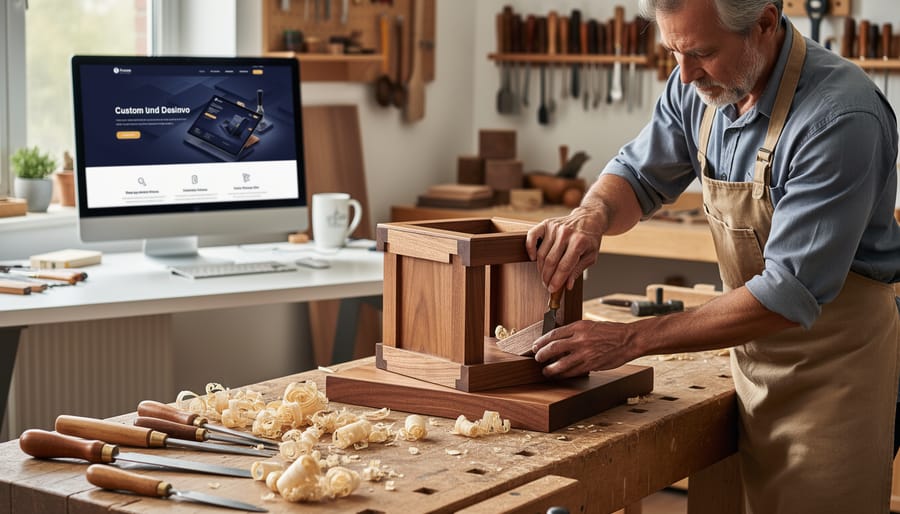
Custom website design means a site planned and built around your particular business, from the layout and navigation to the way your products and story are presented. A ready-made template, by contrast, gives you a pre-set structure that you fill with your own words and photographs. It’s quick and tidy, but it asks your business to fit the frame rather than the other way around.
Think of heirloom furniture. A dining table made to your room’s measurements, in the wood and finish you chose, sits differently in a home than one lifted off a showroom floor. Both can look handsome on the day they arrive. Only one was shaped around the people who will live with it. It’s the same reasoning behind why families invest in custom furniture: the fit and the longevity are worth the thought up front.
A bespoke site makes the most sense when something about your business is hard to capture in a standard layout. That might be a distinctive brand story with generations of craftsmanship behind it, products that customers can tailor by size, finish, or material, or a catalog that is growing and needs room to organize itself gracefully. In these cases, a template tends to flatten what makes you different.
A simpler option may be enough if you sell a small, fixed range of products, need to be online quickly, or are still testing whether an idea will take hold. A well-chosen template can serve you honestly for a time, and you can commission something more tailored when the business has outgrown it.
Key Buying Factors: What to Weigh Before You Hire a Web Design Provider
Portfolio, Craft, and Evidence of Quality

A handsome homepage tells you little. Look past the first impression and judge how each site works. Can you find a product in two or three clicks? Does the menu make sense to someone who has never visited? A well-built site, like a well-built cabinet, reveals its quality in the parts you handle.
Pay close attention to how photography is presented. Do images load crisply without making the page crawl? Can you zoom in on detail, the way you would run a hand along a joint or grain? Speed matters just as much. Open a few portfolio sites on your phone and notice whether they feel quick or sluggish.
Then check for range. If every project shares the same layout and palette, you may be hiring a template with a fresh coat of paint. Strong designers shape each site around the client’s own story.
Finally, ask for references, ideally from retail or product-based clients. Ask what the process felt like, whether deadlines held, and how the site has performed since launch.
Storytelling and Brand Heritage
A good design partner begins with questions, not layouts. Before sketching a single page, they should want to know how your business started, who taught you the trade, what you believe about quality, and why your pieces are made the way they are. A provider who skips this conversation will give you a handsome site that could belong to anyone.
When a designer truly listens, it shows in the details. Page layout gives your story room to breathe, perhaps with an “About” section that sits near the front rather than buried in a footer. The copy carries your own voice, warm and unhurried, instead of recycled marketing phrases. Imagery lingers on the grain of the wood, the hand at the workbench, the joinery that tells a customer how long a piece will last.
Heritage is not decoration to be added at the end. It is the foundation, much like the frame of a well-built chair. Ask any prospective designer how they would place your history at the center of the design, and listen closely to the answer.
Customizable Product Display and Shopping Features
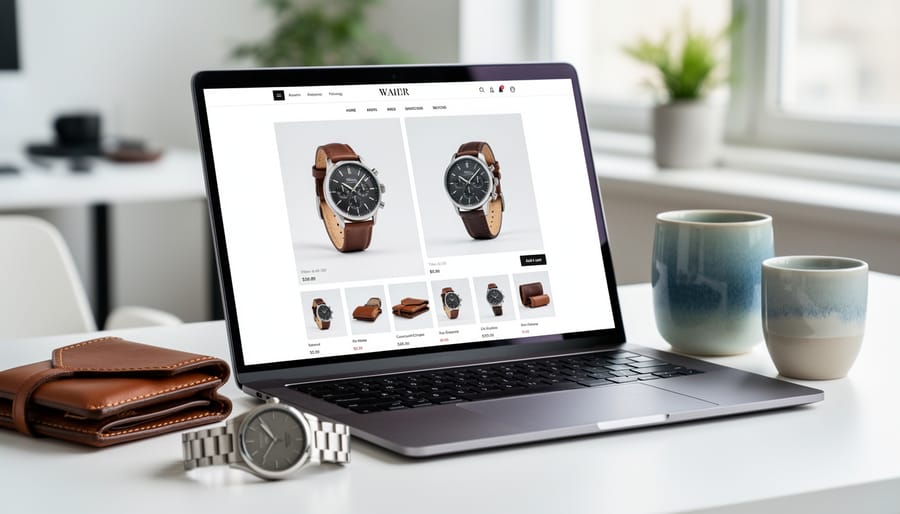
If you sell made-to-order or customizable goods, your website has to do the work of a showroom conversation. A customer choosing wood, fabric, and finish needs to see the options clearly and trust the result. That is why product display and shopping features deserve a place in your first meeting with a designer, not a late-stage revision. Configurators, option selectors, and inventory handling shape the whole structure of a site, and adding them afterward is rarely graceful.
Ask each provider how they would handle these points:
- How will customers see and compare customization options on each product page?
- Can product photos be high-resolution, zoomable, and shown from several angles?
- What happens when a customer wants something not listed: is there a clear inquiry form?
- How will the site track stock for ready pieces versus made-to-order items?
- Does browsing and selecting options feel comfortable on a phone?
- Can shoppers search or filter by material, size, and style?
- Does checkout capture custom choices accurately and confirm them back to the buyer?
A designer who answers these thoughtfully has likely built for retailers like you before.
Process, Communication, Ownership, and Ongoing Care
A good design partner works in clear stages, much like a furniture maker moving from consultation to sketch to finished piece. Expect a structured web design process that begins with discovery, moves to mockups you can react to, allows a defined number of revision rounds, and ends with a careful launch. Ask who will be your point of contact and how quickly they respond, because steady communication prevents most project frustrations.
Settle ownership before work begins. You should own your domain, your content, and the finished design, with access to everything if you ever part ways.
Ask, too, what care follows launch: updates, backups, security checks, and help when something breaks. Request a written scope with a transparent budget, and a timeline that allows for thoughtful feedback rather than rushing the details.
Types of Custom Website Design Services Compared
When you set out to commission a custom site, the first decision is who will build it. Each path has its own temperament, much like choosing between a lone cabinetmaker, a small workshop, or a large factory floor. The right fit depends on the size of your catalog, how much you want to update yourself, and how closely you want to work with the person doing the design.
A freelance designer is the closest thing to a single craftsman at the bench. You get direct conversation and a personal touch, which suits a small business with a focused project. The trade-off is capacity: one person has limited hours and a narrower range of skills, so you may need to find a developer or photographer separately.
A boutique design studio brings a few specialists together under one roof. Designers, writers, and developers usually collaborate, so the result feels cohesive while still receiving individual attention. Studios tend to suit businesses with a strong story, such as a family workshop selling pieces like amish bedroom furniture where the look and the heritage need to work as one. Availability can be limited, since good studios often book well ahead.
A larger full-service agency offers breadth: strategy, design, development, marketing, and ongoing support in one place. That depth helps businesses with complex catalogs or several departments to coordinate. The drawback is that your project can feel like one of many, and the process may be more formal than a small owner needs.
The hybrid option pairs a customized platform theme with professional design. A designer adapts an established theme to your brand rather than building from scratch. It gives you a refined look and a system you can usually update yourself, though it may stop short of a truly bespoke feel.
| Service type | Best suited for | Strengths | Points to consider |
|---|---|---|---|
| Freelance designer | Small retailers with a focused project | Personal attention and flexible working style | Limited capacity and a narrower skill range |
| Boutique studio | Brands with a distinctive story | Cohesive teamwork with individual care | Booking can be tight; scope should be clear |
| Full-service agency | Larger or complex catalogs | Wide expertise and ongoing support | Less personal; more formal process |
| Customized platform theme | Owners who want to self-update | Easy upkeep and a polished look | Less room for a fully bespoke design |
Whichever route you choose, ask about ongoing support early. A site needs regular care, in the same way fine furniture benefits from wood care over the years. Settling that question now keeps the finished work looking its best long after launch.
Recommendations: Matching a Design Service to Your Business
Every business arrives at a custom site with different needs, so the best match depends on where you stand today.
A small family retailer with a growing catalog needs a partner who can make browsing effortless as the range expands. A boutique studio or a skilled freelancer often fits well here, because they can build clear categories, generous photography space, and room to grow without overbuilding. If you want a refresher on how thoughtful shopping journeys work, our buying guide shows how clear information helps customers decide with confidence.
If you plan to make frequent updates yourself, favor a designer who builds on a familiar platform and offers a short training session at handover. Ask to see the editing screens, not only the finished pages.
A brand with a strong story needing a distinctive look should lean toward a studio that begins with long conversations about your heritage, materials, and values. The design should feel as individual as a piece made to order.
To shortlist, choose three providers whose portfolios show range, then ask each for a written proposal. A good proposal outlines the process stages, the number of revision rounds, what is delivered at launch, who owns the files and content, and what ongoing support covers.
When comparing quotes, line them up by scope rather than by total alone. A lower figure that leaves out photography setup, mobile testing, or post-launch care may cost more in the long run. Ask each provider to explain anything unclear in plain language.
Finally, begin with a clear brief. A page or two describing your customers, goals, and favorite examples gives every designer the same starting point and makes their answers far easier to weigh.
Common Mistakes to Avoid When Commissioning a Custom Website
Even a careful buyer can stumble. A custom site, like a well-made cabinet, shows its flaws slowly, so it pays to know where commissions tend to go wrong.
Choosing on price alone is the most common trap. The lowest quote often leaves out discovery, revisions, or support, and you pay for those gaps later. Compare what each proposal includes, not just the total.
Skipping the discovery conversation is nearly as costly. A designer who doesn’t ask about your history, your customers, and how your pieces are made is guessing. Insist on that conversation before any mockups begin.
Overlooking mobile shoppers matters because so many people browse furniture on their phones, and a clumsy mobile layout sends them away. Research suggests mobile optimization improves conversions so ask to see every page on a phone early in the process.
Here is a quick reference for the missteps above and the others worth watching for:
- Price-only decisions: compare scope, revisions, and support side by side.
- No discovery talk: require a structured conversation before design starts.
- Weak mobile experience: test every page on a phone during review.
- Leaving out your heritage: give your story and craftsmanship a prominent place in the layout.
- Thin content and poor photography: budget for quality images and well-written copy.
- No plan for upkeep: agree on maintenance, updates, and who owns the site before launch.
The last three deserve a closer look. A site that hides your heritage reads like any other store, which defeats the purpose of going custom. Fine joinery photographed badly still looks ordinary, so treat photography and copy as part of the build, not an afterthought. And a launch is not the finish line: without a plan for updates and care, even a beautiful site slowly loses its polish.
Frequently Asked Questions About Custom Website Design Services
How long does a custom website project generally take?
It depends on the size of your catalog and how many revisions you need, but a thoughtful project moves through discovery, mockups, revisions, and launch in stages. Ask any provider for a realistic timeline in writing, and be wary of one that promises a finished site in a hurry.
Can I update a custom site without a developer?
Often, yes. Many designers build on a content management system so you can edit text, swap photographs, and add products yourself. Confirm this early, and ask for a short walkthrough at handover.
What should I prepare before the first meeting?
Bring the story of your business, a sense of who your customers are, a few sites you admire, and your best photography. A clear brief helps a designer understand your heritage and goals from the very first conversation.
How does custom design differ from a template, and is ongoing support necessary?
A template is a ready-made layout you adapt, while a custom design is shaped around your brand, products, and customers from the start. As for support, a little ongoing care for updates, security, and small fixes helps a site stay dependable, much like polishing a fine table keeps it beautiful for years.
If these answers raise more questions, it is worth reviewing the common design mistakes that apply just as readily to a website as to a room, so you can recognize them before they become costly. Every business is different, and the best answers will come from an honest conversation with the designer you choose.
A well-made piece of furniture rarely comes from a rushed order. It comes from a clear conversation, patient work, and a maker who understands what the piece is meant to hold, and who it will serve for years. A custom website rewards the same care.
As you weigh your options, keep the essentials close: a portfolio that shows real range and quality, a designer who takes time to learn your story and heritage, product display that suits how you actually sell, and a process that is open about communication, ownership, and what happens after launch. Choose the service model that fits your business, and resist the pull of price alone.
The best place to begin is with a clear brief. Write down who you serve, what you offer, and what you want visitors to feel. Then sit down with a prospective designer and talk it through. A thoughtful first conversation often tells you everything you need to know about the work to come.